
Starting to sell on Amazon in 2025 involves creating a Seller Central account, choosing a fulfillment method, and listing products strategically to leverage new incentives like 10% back on your first $50,000 in branded sales. Beginners from regions like Morocco can register internationally but must prepare business details, tax info, and identity verification upfront. Treat this as a structured project aligned with your print-on-demand and KDP experience for smoother scaling.
Create Seller Account
Register at Seller Central by selecting a Professional plan ($39.99/month) for tools like bulk listings and ads, ideal if you exceed 40 sales monthly, or Individual ($0.99 per sale) for testing. Provide business address, bank details, tax ID, and enable two-step verification; international sellers need KYC documents and must comply with local regulations like EU taxes or US tariffs. New sellers get incentives including free FBA storage, $100 shipping credits, and $50 ad credits.[1][2]
Choose Selling Model
Decide between FBA (Amazon handles storage, shipping, Prime eligibility) for high-volume items or FBM (you manage fulfillment) for low-margin or bulky products to control costs. Private label suits your POD background by branding designs, while retail arbitrage involves reselling discounted goods; FBA fees rose 10-15% in 2025, so calculate landed costs for profitability. Over 70% of new sellers see first sales in under 60 days using FBA.[1][3][4]
Research and List Products
Conduct market research via Seller Central tools for niches like health journals tying into your KDP work, then create listings with ASIN, titles, keywords, high-quality images, and competitive pricing that factors fees for real margins. Use Build International Listings for global reach and enroll in Brand Registry for IP protection on designs; start with “Add a product not sold on Amazon” for unique POD items.[5][6]
Fulfill and Promote
Ship to Amazon warehouses for FBA to gain Prime badges boosting visibility, or handle FBM yourself for custom packaging; monitor metrics like order defect rates under 2025 policy updates to avoid penalties. Launch Sponsored Products ads with your $50 credit, optimize with data on sales velocity, and build reviews via compliant follow-ups for long-term growth.[7][4]
Scale Strategically
Track performance in Seller Central, refine listings with A/B tests, and expand to global marketplaces while diversifying suppliers amid tariffs; integrate with your Amazon Associates for cross-promotion in Maghreb markets. Aim for programs like Subscribe & Save on repeat items like journals.[6]
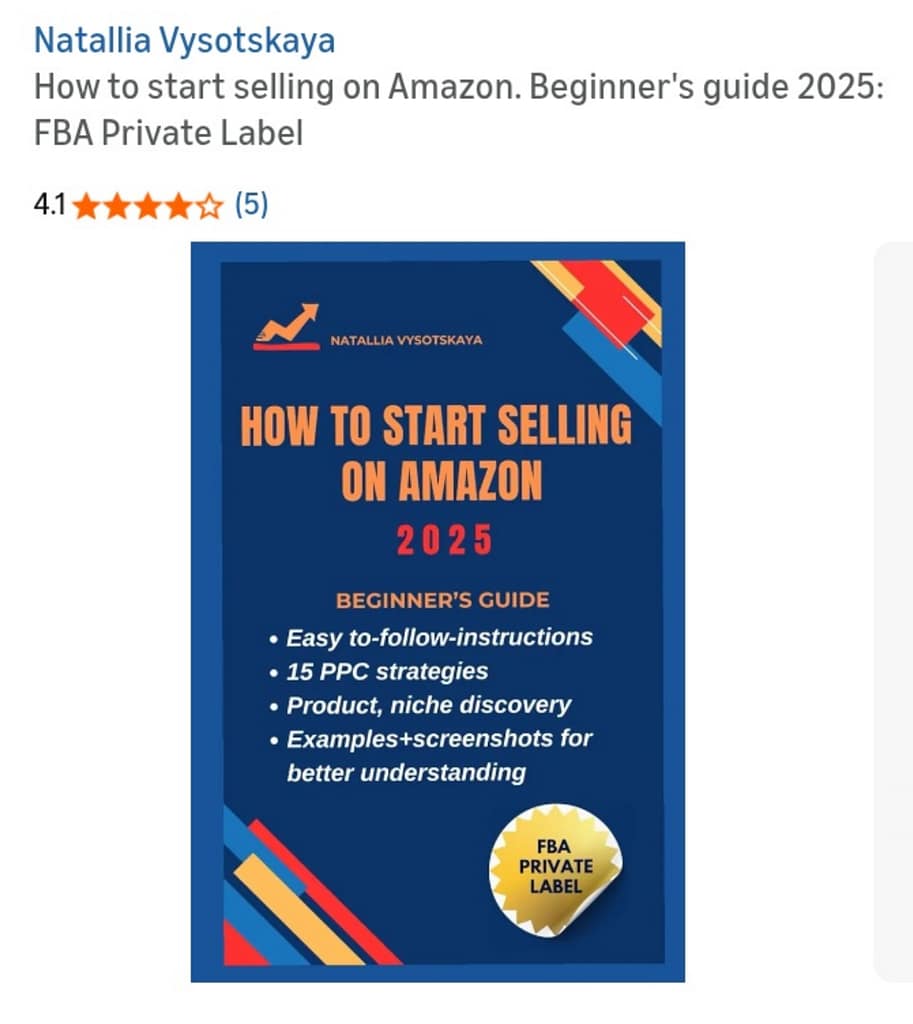
A key promise of the book is a set of “15 PPC strategies,” meaning it dedicates an important section to Amazon advertising and how to use pay‑per‑click campaigns to drive traffic and sales profitably. It also emphasizes product and niche discovery, indicating that readers learn how to research demand, competition, and margins before investing in inventory. The author, Natallia Vysotskaya, presents herself as a practitioner who distills her knowledge into easy‑to‑follow instructions tailored to current 2025 conditions, with a focus on helping beginners avoid common mistakes and build a sustainable private‑label brand on Amazon.
This book is a practical beginner’s guide for launching a Private‑Label business on Amazon using FBA in 2025. It focuses on step‑by‑step instructions that walk readers from basic account setup through product selection, listing creation, and campaign optimization, aiming to make the process accessible even for people with no previous e‑commerce experience. The cover highlights that the guide includes screenshots and examples, which suggests the author explains each stage with visual support to reduce confusion and help readers copy the process more easily. [1]